Can a Lisfranc Injury Heal on Its Own
Bones Beefcake
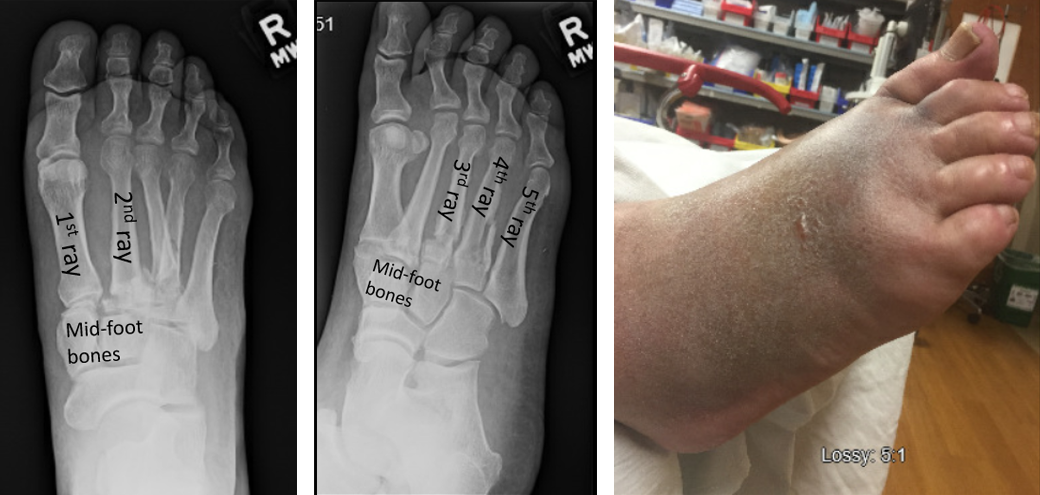
A "LisFranc" injury is an injury to the articulation between the long basic in the foot (metatarsals) and the bones they connect to (tarsal bones). This injury can affect the ligaments (soft tissue that connects bone to bone) of these bones and/or include fractures of the bones themselves. The injury can hurt the whole foot or be limited to part of the foot.
Since there is very little pare over the bones of the foot, nerves and arteries that lie directly on height of the bones can exist injured as well. This injury can cause the foot to slap-up a neat bargain. The bones tin can push on the skin causing damage or baking of the pare.
The bones and ligaments are of import for keeping the shape of your foot. When yous step down, your bones and ligaments resist that force and keep the bones in their proper places, maintaining the arch of your pes. When your ligaments or bones are injured, your foot tin collapse, which causes pain while walking.
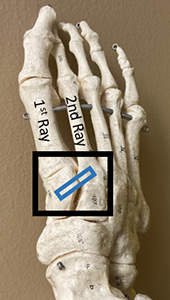
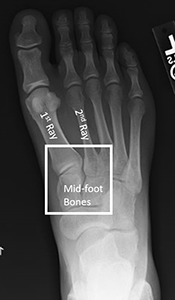
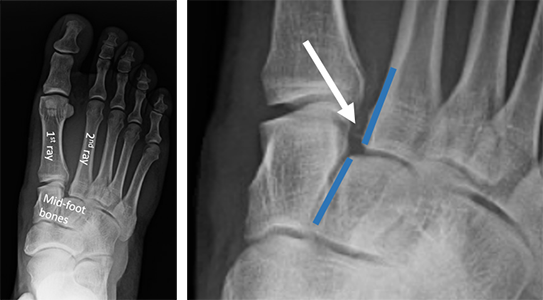
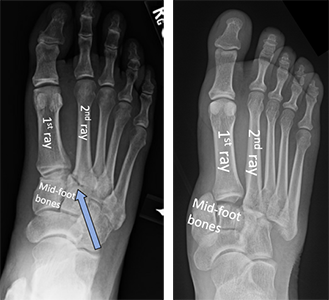
Machinery and Epidemiology
LisFranc injuries are rare and account for less than 1 per centum of all fractures. They happen afterward trauma to a foot from a autumn, motor vehicle accident, a crush injury, or even an athletic injury. This can happen when you have placed your weight on your foot, with your toes pointed down and you twist your foot. Since this injury tin happen with injuries to the ligaments merely or the basic and ligaments, it tin happen in many different means. A vanquish injury that causes a LisFranc injury can expect very dissimilar from an able-bodied injury.
Initial Treatment
These injuries will brand the middle of your foot injure when you try to walk or stand. Your foot tin can swell up. The pain may be then bad yous can't walk. A md volition examine your foot to make sure your skin is okay and that the bones are not pushing on it. Ten-rays of your foot will be taken, and x-rays of your other, uninjured foot may likewise exist taken for comparison. A CT scan may also be done, because it can exist hard to run across the details of your injury using but x-rays. This is especially true if just the ligaments are injured.
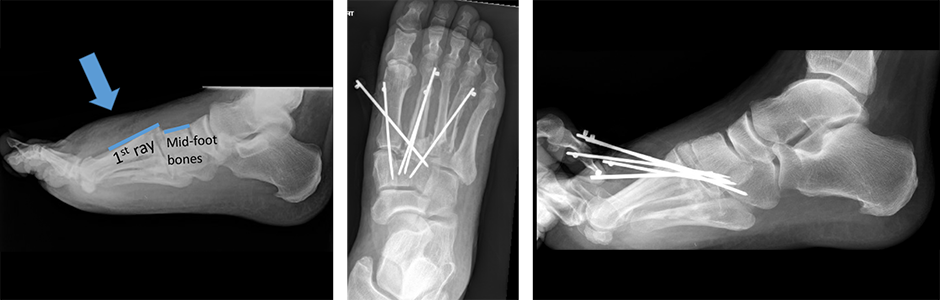
If your basic are pushing against the skin or are far away from where they should exist, your doctor may attempt a reduction (pushing the bones back into place). This can exist done in the emergency room or the operating room. If the basic came through the skin or they can't be put dorsum into place, you will usually have to go to the operating room.
A splint or a boot may exist used to protect your foot and to help with your pain past stabilizing your injury. Generally, your doc won't want you putting any weight onto your foot, and you should elevate your human foot to help reduce swelling. As long every bit your skin is okay and your bones are in a good position, you can usually go home from the emergency room and be seen by an orthopaedic surgeon in a clinic on some other day.
Full general Treatment
LisFranc injuries often require surgery. There are times when the basic are lined up in a way that allows them to heal without surgery. In that setting, they generally require a cast or splint and no weight bearing for several weeks to months.
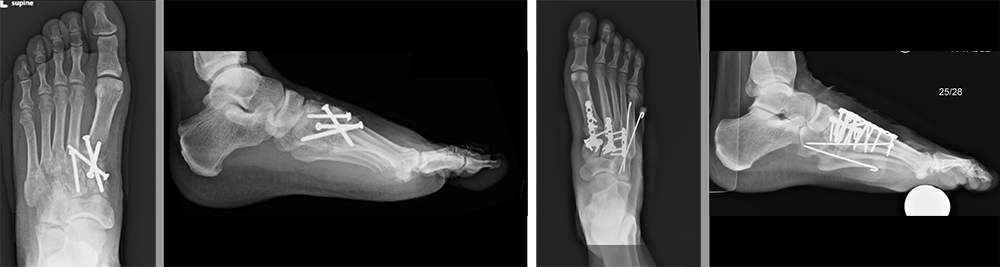
Surgery can be washed several ways. Screws, plates and screws or even pins can be used to concord your bones together. Your surgeon will make the decision how best to prepare your specific injury. The basic can be stock-still in a fashion that allows the ligament or bones to heal. This may keep the joints between the bones as they were. Your surgeon may also decide to fuse the bones together by removing the cartilage between the bones. A discussion about the risks and benefits of both of these options should be had with your surgeon. In surgery, pins may exist placed through the peel to hold the basic in place. These may be taken out in dispensary a few weeks later on. This can be slightly painful, but in general is very quick and many patients tolerate the pain well.
If the bones are stock-still and not fused together, the plates, screws or pins may need to be taken out later. This usually means another surgery that requires anesthesia.
Postoperative Intendance
After surgery, it is important to drag your foot to reduce swelling. The pare on the top of your pes is thin, and swelling causes tension on the wound. Usually, you will exist in a splint, cast or a boot for several weeks to months. This protects the bones and ligaments while they are healing. You will also probably not be able to put weight on your foot for ii-3 months while it is healing. This will require using crutches, a walker, a knee scooter, or even a wheelchair to get effectually safely. The most important thing is to follow the instructions of your surgeon. Falls, putting weight on your pes too early, or too much swelling tin can crusade bug that may impact how yous heal.
After a period of not putting weight on your foot, yous may start concrete therapy. The therapist may work on move of your ankle, and once approved by your surgeon they may piece of work with you lot on putting some weight on your foot. It is generally several months before you lot can put your total weight on your foot. While this may be frustratingly slow, it is important for proper healing of your bones and ligaments. It is important to follow the instructions of your surgeon.
Long Term
LisFranc injuries can have long term effects on your foot. Some people are able to get dorsum to the activity level they had before the injury. However, it is common to have some persistent pain, stiffness, and weakness. This can happen even later a surgery and healing period that goes perfectly. Your foot takes all the weight of your trunk with each step. There is a lot of stress beyond these minor basic and ligaments, and after a LisFranc injury they may not be as practiced equally they were before your injury. This may hateful that you have to modify your activities. It may also mean using special shoes or braces. Sometimes people require more surgery in the future.
More than Information
- American University of Orthopaedic Surgeons
---
Christopher Domes, MD
Edited by the OTA Patient Educational activity Committee and David Sanders, MD (section lead)
All 10-rays and pictures taken from the personal drove of Dr. Domes
Source: https://ota.org/for-patients/find-info-body-part/3721

Post a Comment for "Can a Lisfranc Injury Heal on Its Own"